
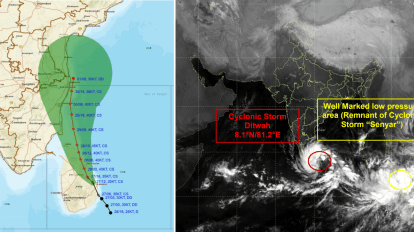
🌪️ What is Cyclone Ditwah?
-
Cyclone Ditwah formed over the southwest Bay of Bengal and intensified as it passed over the coastal region south of India and Sri Lanka.
-
The name “Ditwah” refers to a lagoon on the island of Socotra, Yemen — a naming choice under the global cyclone naming convention.
-
As the storm moved north-northwestwards after impacting Sri Lanka, meteorological agencies warned of heavy rainfall, strong winds, rough seas and possible coastal impact along southern India. India Today+2The Times of India+2
⚠️ What Damage Has Cyclone Ditwah Caused (So Far)
✔️ Widespread Rain, Flooding & Agricultural Loss
-
Delta and coastal districts of Tamil Nadu witnessed heavy to very heavy rainfall, triggering flooding in many areas.
-
Official figures: about 57,000 hectares of farmland have been affected in the delta districts.
-
In addition, about 149 cattle have died across the region.
-
Numerous homes, huts and other vulnerable structures suffered damage, and many areas experienced waterlogging and inundation after heavy rains.
☠️ Human Casualties & Safety Impact
-
Tamil Nadu authorities confirmed 3–4 deaths linked to rain- and storm-related incidents: wall collapses, electrocution, etc.
-
Several districts saw disruption in essential services: rail and flight services were cancelled or rerouted, travel was advised against, and coastal warnings were issued — affecting daily life for many citizens.
🏙️ Disruption to Infrastructure & Public Services
-
Many flights from major airports like Chennai were cancelled.
-
Schools and colleges in many districts were closed as a precaution due to heavy rainfall and risk of flooding.
-
Coastal and delta areas saw rough sea conditions — fishermen were warned not to venture out; sea travel and fishing activity were suspended.
🔄 Latest Updates: Where Does Ditwah Stand Now?
-
As of now, Cyclone Ditwah has weakened into a deep depression, but heavy rain and strong winds continue in many parts of Tamil Nadu. The New Indian Express+2The Times of India+2
-
A red alert remains active for northern coastal and delta districts; residents are urged to stay cautious.
-
Local authorities — including disaster response teams (NDRF / SDRF) — have been mobilised and relief camps set up where necessary.
-
Forecasts warn that isolated pockets could still receive extremely heavy rainfall (20 cm+ in 24 hours), making waterlogging, flooding, and agricultural damage possible over the next 24–48 hours. The Times of India+2The Times of India+2
🌾 How Cyclone Ditwah Affects Tamil Nadu (Especially Delta & Coastal Districts)
✅ Agriculture & Livelihood Hit Hard
Large swathes of farmland — rice paddy, banana plantations, and other crops — have been submerged or damaged. This will likely affect yield and income for many farmers in delta districts like Nagapattinam, Mayiladuthurai, Tiruvarur, Thanjavur, etc.
Loss of livestock (cattle), damage to farm-related infrastructure and huts add to the hardship.
🏠 Displacement, Loss & Disruption for Residents
Flooding and waterlogging in low-lying areas, damage to poorly built houses/huts, and cuts in essential services mean many families may face temporary displacement or hardship.
Travel, transport, and fishing — all disrupted. Rail and flight cancellations have inconvenienced thousands.
🚨 Health, Safety & Emergency Response Under Stress
Rain-related accidents, electric hazards (downed wires), wall collapses, and natural flooding pose serious risks.
Local authorities are pressed into relief and rescue operations; emergency shelters and camps have been opened; disaster response activated.
📚 Schools, Education & Daily Life Disrupted
Closure of schools and colleges across many districts; uncertainty over reopening; delays in transport and public services — all affecting normal life.
📝 What You Should Know / Do — Precautions & Recommendations
-
Stay indoors if you are in coastal/delta districts under alert. Avoid unnecessary travel.
-
Keep updated on weather advisories issued by the India Meteorological Department (IMD).
-
Avoid flooding zones, don’t venture into the sea or coastal waters.
-
Safeguard livestock and crops if possible; move valuables to safe, elevated locations.
-
If forced to travel, check transport advisories — many flights and trains are disrupted.
-
Help vulnerable neighbours and community members, especially in low-lying zones.
-
Stay aware of local relief camps and aid — reach out if you need assistance or know someone who does.
🌏 Final Thoughts
Cyclone Ditwah — although weakening — has already left a significant mark on Tamil Nadu’s delta and coastal regions. With widespread agricultural loss, damage to homes, livestock deaths, and human casualties, the next few days will be critical for relief and recovery efforts.
Even as the storm subsides, rainfall, flooding, and after-effects may linger; careful coordination and community support will matter most during this period.
Let’s stay alert, help each other — and hope for a smooth recovery in the coming days.






Leave A Comment