
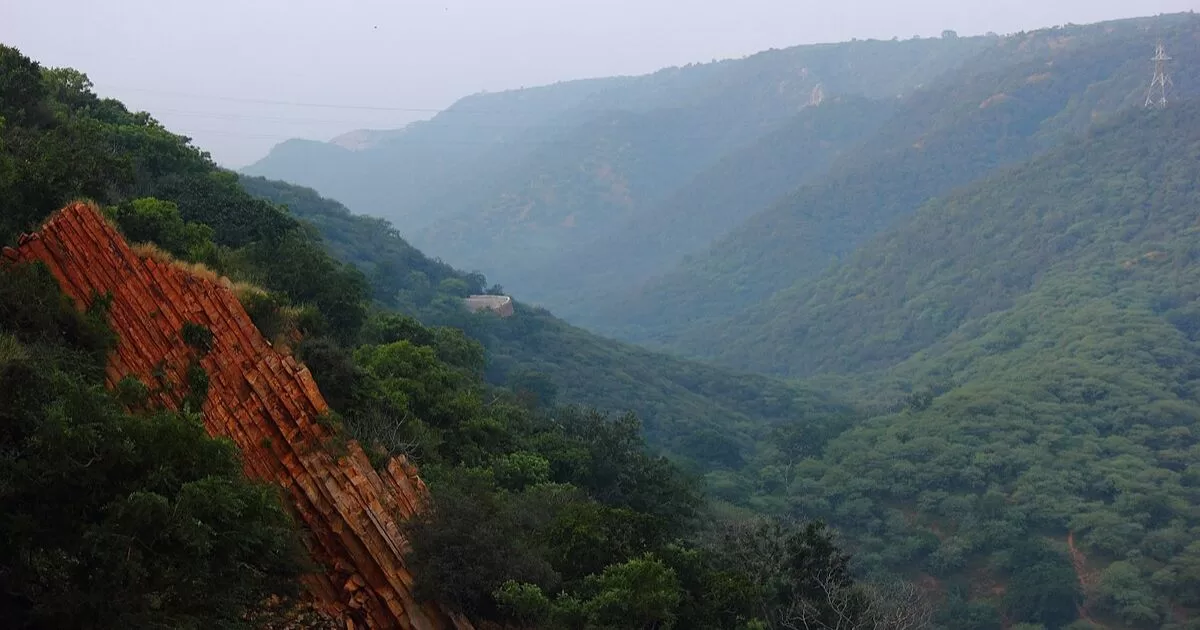
The Aravalli Range is one of the oldest mountain ranges in the world and holds great importance in India’s geography, environment, and history. Even though these mountains are not very tall today, they play a major role in protecting nature and supporting life in north-western India.
📍 Location and Extent of the Aravalli Range
The Range stretches for about 670 kilometers, running in a south-west to north-east direction. It begins near Palanpur in Gujarat, passes through Rajasthan and Haryana, and ends at the Delhi Ridge.
States covered by the Aravalli Range:
-
Gujarat
-
Rajasthan
-
Haryana
-
Delhi
The highest peak of the Aravalli Range is Guru Shikhar, located near Mount Abu in Rajasthan.
🏔️ Is the Aravalli a Mountain or a Valley?
The Aravalli is a mountain range, not a valley.
-
A mountain range is a chain of hills or mountains.
-
A valley is a low area between mountains.
Because the Aravalli Range is extremely old—formed over 1.5 billion years ago—it has been eroded by wind and water for millions of years. That is why today it looks like low hills rather than tall mountains.
🪨 Geological Importance
The Range is made up of some of the oldest rocks on Earth, including:
-
Gneiss
-
Schist
-
Quartzite
-
Marble
These ancient rocks help scientists understand the early history of the Earth. The Range is even older than the Himalayas, making it geologically very significant.
🌧️ Role in Climate, Rainfall, and Rivers
The Aravalli Range plays an important role in shaping the climate of north-western India.
-
It acts as a natural barrier against the spread of the Thar Desert.
-
It influences monsoon winds and helps in rainfall in nearby regions.
-
It reduces dust storms and controls extreme heat.
Several rivers are connected to the Range, such as:
-
Luni River
-
Banas River
-
Sahibi River
These rivers support agriculture, drinking water supply, and daily life.
🌳 Vegetation and Wildlife
The Range supports dry deciduous forests, grasslands, and thorny vegetation.
Common trees found here:
-
Neem
-
Dhok
-
Babool
-
Peepal
Wildlife in the Aravalli region includes:
-
Leopards 🐆
-
Hyenas
-
Nilgai
-
Foxes
-
Many species of birds 🐦
Protected areas like Ranthambore National Park and Sariska Tiger Reserve are linked to the Aravalli ecosystem.
🧑🌾 Human Settlements and Cultural Importance
For thousands of years, people have lived near the Aravalli Range because:
-
Water sources were available
-
Land was suitable for farming
-
The hills provided natural protection
Many tribal communities still depend on the Range for their livelihood. Important cities located near the range include Udaipur, Ajmer, Alwar, and Gurgaon.
🏞️ Tourism and Heritage Sites
The Range is rich in tourism and historical heritage.
Popular places include:
-
Mount Abu – the only hill station in Rajasthan
-
Kumbhalgarh Fort – a UNESCO World Heritage Site
-
Ranthambore National Park
-
Sariska Tiger Reserve
Tourism in these areas supports the local economy and preserves cultural heritage.
⚠️ Threats to the Aravalli Range
Today, the Range is facing serious environmental challenges:
-
Illegal mining of stone and marble
-
Deforestation
-
Rapid urban expansion
These activities are damaging the ecosystem, reducing groundwater levels, and increasing pollution.
✨ Conclusion
The Aravalli Range may not be as tall as the Himalayas, but its importance is immense. It protects the land from desertification, supports wildlife, controls climate, and sustains human life. Preserving the Range is essential for maintaining environmental balance and a healthy future.






Leave A Comment