
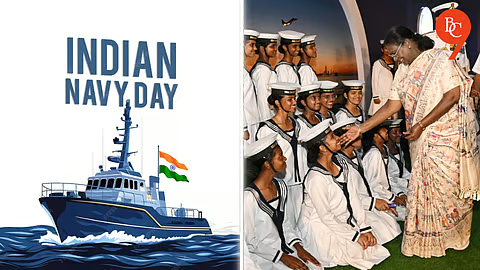
Every year on December 4, India proudly celebrates Indian Navy Day to honour the courage, strategic excellence, and sacrifices of the Indian Navy. While the day is marked by ceremonial events and naval displays, its true significance lies deep in India’s maritime history and national security framework. For students and citizens alike, Navy Day serves as a powerful reminder of India’s strength at sea and its evolving global maritime role.
📜 The Historic Reason Behind December 4
The date December 4 holds immense historical importance as it marks Operation Trident, a daring naval attack carried out during the 1971 Indo-Pakistan War. On the night of December 4, 1971, Indian missile boats launched a surprise attack on Karachi Harbour, sinking four Pakistani vessels, including the powerful PNS Khaibar.
What made this operation extraordinary was the flawless execution—not a single Indian sailor was lost. The mission showcased India’s advanced naval technology, strategic brilliance, and unmatched courage. This decisive victory elevated India’s global naval standing and demonstrated how maritime power could reshape the outcome of war.
🏛️ A Date Etched in Maritime History
Operation Trident was India’s first major offensive naval action since Independence. The coordinated strike destroyed critical enemy assets, crippled fuel reserves, and forced Pakistan into a defensive position. Indian forces even used Russian language radio signals to confuse the enemy, showcasing tactical ingenuity.
Beyond celebrating victory, Navy Day also honours the sailors who laid down their lives during the 1971 war, reinforcing the themes of sacrifice, bravery, and national pride.
🗓️ The Evolution of Navy Day Celebrations
Before 1972, Navy Day was observed on different dates:
-
Trafalgar Day (from the Royal Navy tradition)
-
1 December
-
15 December
In 1972, the Government of India officially fixed Navy Day on December 4, linking the celebration directly to India’s own naval triumph rather than colonial customs. This decision was symbolic and strategic—it strengthened national identity and made the Navy’s achievements more meaningful for the Indian public.
🚢 The Indian Navy’s Role in Modern India
Today, the Indian Navy stands as a formidable blue-water force with:
-
Over 67,000 skilled personnel
-
Around 150 ships and submarines
Its responsibilities extend far beyond defending India’s coastline. The Navy:
-
Protects critical sea trade routes
-
Conducts disaster relief and rescue missions
-
Builds global partnerships through joint military exercises
-
Safeguards India’s strategic interests across the Indo-Pacific region
As geopolitical tensions increase and new maritime challenges emerge, the Navy’s role continues to grow in importance.
🎉 Navy Week: Connecting the Navy with Citizens
In the days leading up to Navy Day, Navy Week is celebrated to bring citizens closer to the maritime world. Activities include:
-
Warship and aircraft exhibitions for students
-
Naval air displays over major harbours
-
Inter-school competitions and quizzes
-
Blood donation drives
-
Community service by sailors
-
Live performances by the Naval Symphonic Orchestra
-
Virtual Reality tours of INS Vikramaditya, allowing people nationwide to experience life aboard an aircraft carrier
These initiatives strengthen public awareness and build emotional connections with the Navy.
🇮🇳 President Droupadi Murmu’s Navy Day Message
On Navy Day, President Droupadi Murmu extended her greetings to Indian Navy personnel, veterans, and their families. In her message, she praised the Navy for:
-
Defending maritime borders
-
Securing vital trade routes
-
Strengthening the blue economy
-
Leading humanitarian and disaster relief missions
Her words highlighted that the Indian Navy represents not just military strength, but also discipline, compassion, responsibility, and national service.
🎓 Why Navy Day Matters for Students
For students, Navy Day serves as an important educational moment. It offers:
-
Insight into India’s maritime power and strategy
-
Understanding of how naval innovation shapes national security
-
Inspiration for careers in defence services, engineering, science, leadership, and public service
It also teaches that maritime security is directly connected to economic growth, humanitarian outreach, and global influence.
🌊 Final Thoughts: A Day of Honour, Reflection & National Pride
Indian Navy Day is more than a historical anniversary—it is a celebration of courage, strategy, technological excellence, and unwavering national commitment. By remembering the legacy of Operation Trident and honouring the sailors who continue to guard India’s oceans, the nation reaffirms its maritime strength and strategic vision.










Leave A Comment