
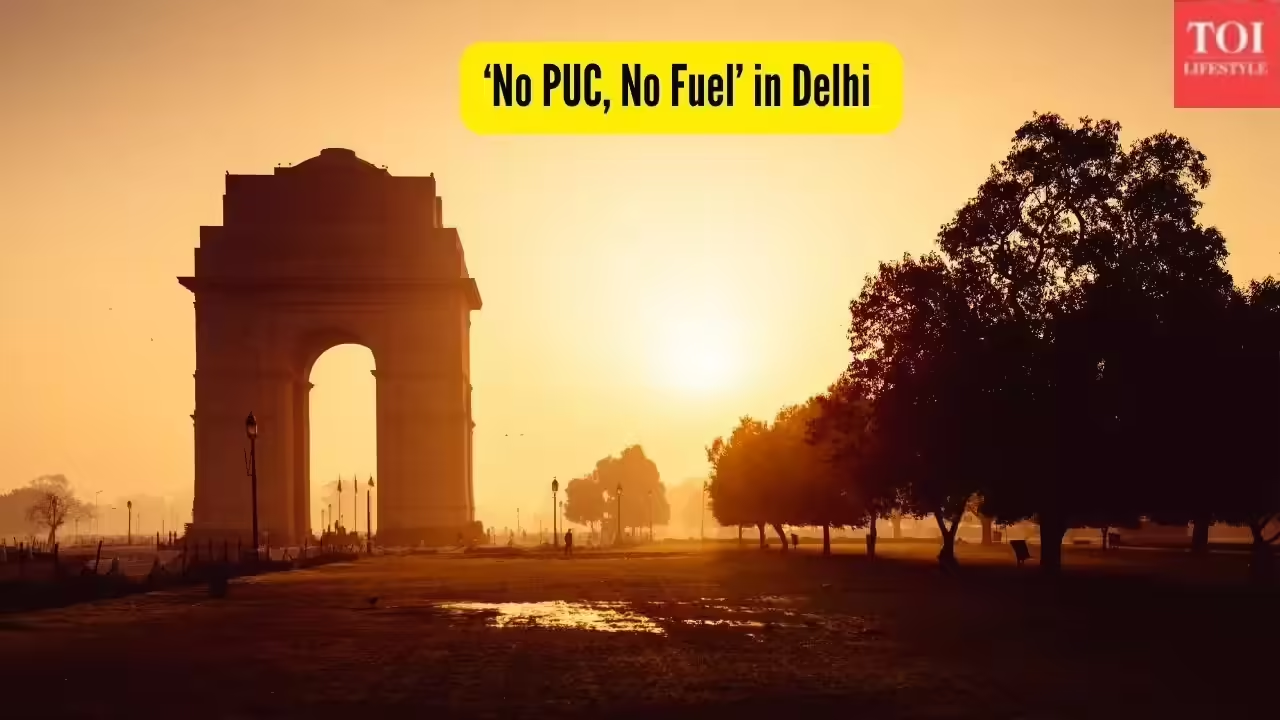
Delhi’s air pollution crisis has reached alarming levels, prompting authorities to roll out one of the strictest measures yet under the Graded Response Action Plan (GRAP). From Thursday, December 18, the capital has officially enforced the “No PUC, No Fuel” rule, denying fuel to vehicles without a valid Pollution Under Control (PUC) certificate.
⚖️ A Rule Backed by Law and Urgency
Issued under Section 5 of the Environment (Protection) Act, 1986, the policy will remain in force for as long as GRAP Stage-IV stays active. Officials have described the situation as a health emergency, particularly for children, the elderly, and those suffering from respiratory ailments.
🚓 Strict Enforcement Across the Capital
To ensure compliance, the Delhi government has launched a large-scale enforcement drive. Over 580 police personnel and 37 specialised ‘Prakhar’ enforcement vans have been deployed at 126 checkpoints across the city. Transport department officials have also been stationed at petrol pumps to verify PUC certificates before allowing vehicles to refuel.
Technology plays a key role in monitoring compliance. Automatic Number Plate Recognition (ANPR) cameras, along with the VAHAN database, are being used to track vehicle details in real time. Petrol pump operators have been instructed to deny fuel to vehicles that fail to meet emission norms.
🚗🚫 Older and High-Emission Vehicles Face the Heat
As part of the GRAP-4 restrictions, BS-III petrol and BS-IV diesel vehicles registered outside Delhi have been completely banned from entering the city. Non-BS-VI vehicles, along with older diesel commercial vehicles (except those providing essential services), are also prohibited.
Authorities estimate that these restrictions will impact more than 1.2 million vehicles from neighbouring states such as Haryana, Uttar Pradesh, and Rajasthan, many of which significantly contribute to the city’s pollution load.
🚛🚫 Ban on Construction Material Trucks
To curb particulate matter pollution, trucks carrying construction materials like sand, gravel, and cement have also been banned from entering Delhi. Heavy vehicles contribute significantly to dust and air pollution, and violations will lead to vehicle seizure and hefty fines.
✅🚙 Vehicles That Are Allowed
Despite the restrictions, certain vehicles are permitted to operate:
-
✔️ BS-VI compliant petrol and diesel vehicles
-
⚡ Electric vehicles (EVs)
-
🔵 CNG and LNG vehicles
-
🚑 Emergency and essential services vehicles
-
🚌 Public transport meeting emission norms
-
📄 Vehicles with valid registration and PUC certificates
🛑🌍 Why These Measures Matter
While authorities acknowledge that these steps may disrupt daily commuting and logistics, they stress that such measures are essential to protect public health. Vulnerable groups—including children, senior citizens, and individuals with respiratory illnesses—are at the highest risk due to prolonged exposure to polluted air.




Leave A Comment